


Rooted services · Infants, children, adults & families
Support for the little steps.
And the big possibilities.
Individualized occupational therapy, focused intensives, and playful classes—supporting development, movement, and everyday participation across the lifespan.
Strong roots.
Meaningful movement.
Room to grow.
Care that meets you where you are
A thoughtful beginning.
A plan to grow with.
Occupational therapy evaluations
1 hourAn individualized evaluation for infants, children, or adults to explore strengths, understand everyday challenges, and identify meaningful goals.
- Personal or developmental history and client or caregiver conversation
- Observation and individualized assessment through age-appropriate activities
- Recommendations and meaningful next steps
Weekly occupational therapy
30–60 minutes per sessionTypically 1–3 sessions per week, depending on individual needs.
Individualized sessions for infants, children, and adults that connect personal goals with movement, meaningful activities, and everyday routines. Weekly frequency varies according to needs and the treatment plan.
- Infant development and childhood play
- Motor skills, sensory needs, and regulation across ages
- Adult daily activities, independence, and caregiver guidance
What to expect
A clear first step.
A little more peace of mind.
Whether you’re seeking support for your child or yourself, you don’t need to have everything figured out before reaching out.
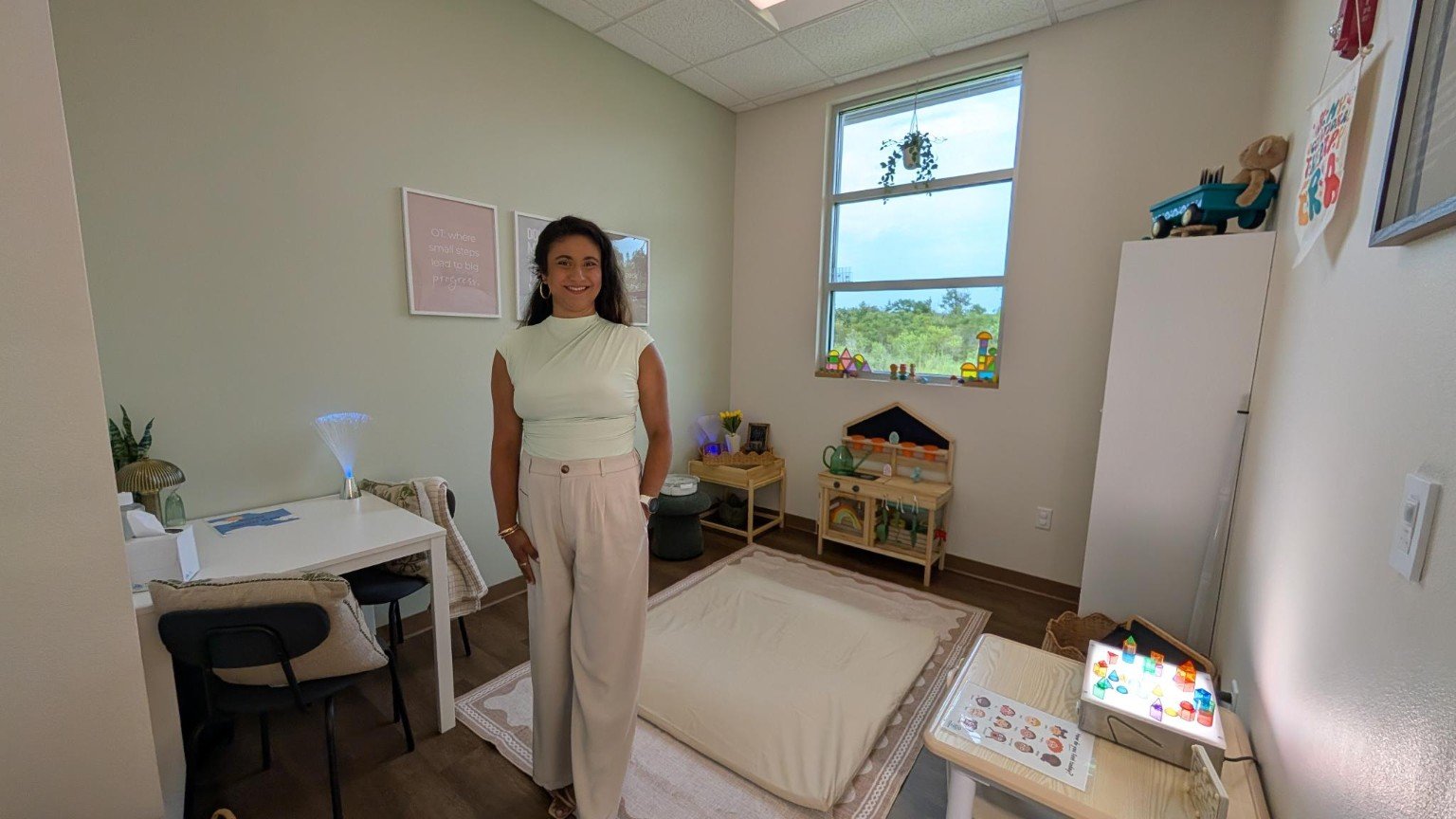
Start with a conversation
Use the Contact page to ask about availability and the service you’re interested in. Kristy will help you determine whether an evaluation is the right starting point and arrange scheduling with you.
An inquiry does not reserve an appointment. Keep medical history and private health details out of the website contact form.
Come as you are
Wear comfortable clothing that allows movement. A few helpful things to have ready:
- Your questions and the everyday activities you’d like to feel easier.
- Relevant previous evaluations or reports, if available; ask Kristy how to share them securely.
- Glasses, hearing aids, communication tools, or mobility supports normally used.
- For children, a familiar comfort item and their usual care supplies.
Your one-hour evaluation
The visit includes a conversation about strengths, routines, and priorities, along with observation and individualized assessment. For children, this may involve play and movement; for adults, activities relate to meaningful daily tasks.
Share any communication, sensory, or accessibility needs when arranging your visit so you can discuss helpful accommodations.
Make sense of the next steps
Kristy will review findings and recommendations with you, discuss meaningful goals, and explain the proposed plan. You’ll have space to ask questions and discuss how recommendations fit into everyday life.
Ask what you can begin at home and when to expect any written evaluation summary or follow-up.
Which kind of support fits?
Weekly treatment: individualized sessions lasting 30–60 minutes, typically 1–3 times per week depending on needs.
Intensives: concentrated, individualized therapy—typically 4–5 days per week, 3–4 hours per day, for 3–4 weeks, with pacing and breaks tailored to the person.
Classes and groups: shared play and learning, typically once a week for 60 minutes. Placement considers the group’s focus and each participant’s support needs.
You don’t need to choose a program on your own. Kristy can help you explore the options.
Before your appointment, confirm the location, paperwork, and any visit-specific instructions directly with Kristy.
Ask about your first visit ↗Focused care, individualized pacing
Time to focus.
Room to grow.
Intensive programs typically run 4–5 days per week, 3–4 hours per day, for 3–4 weeks. The plan includes breaks, changes of activity, and pacing tailored to individual needs and tolerance.
Primitive Reflex Integration Intensive
A concentrated program considering reflex-related movement patterns alongside strengths, functional goals, and everyday participation.
Individualized movement activities, client or caregiver education, and a practical home plan connect the intensive experience to daily life.
Explore this intensive: Primitive Reflex


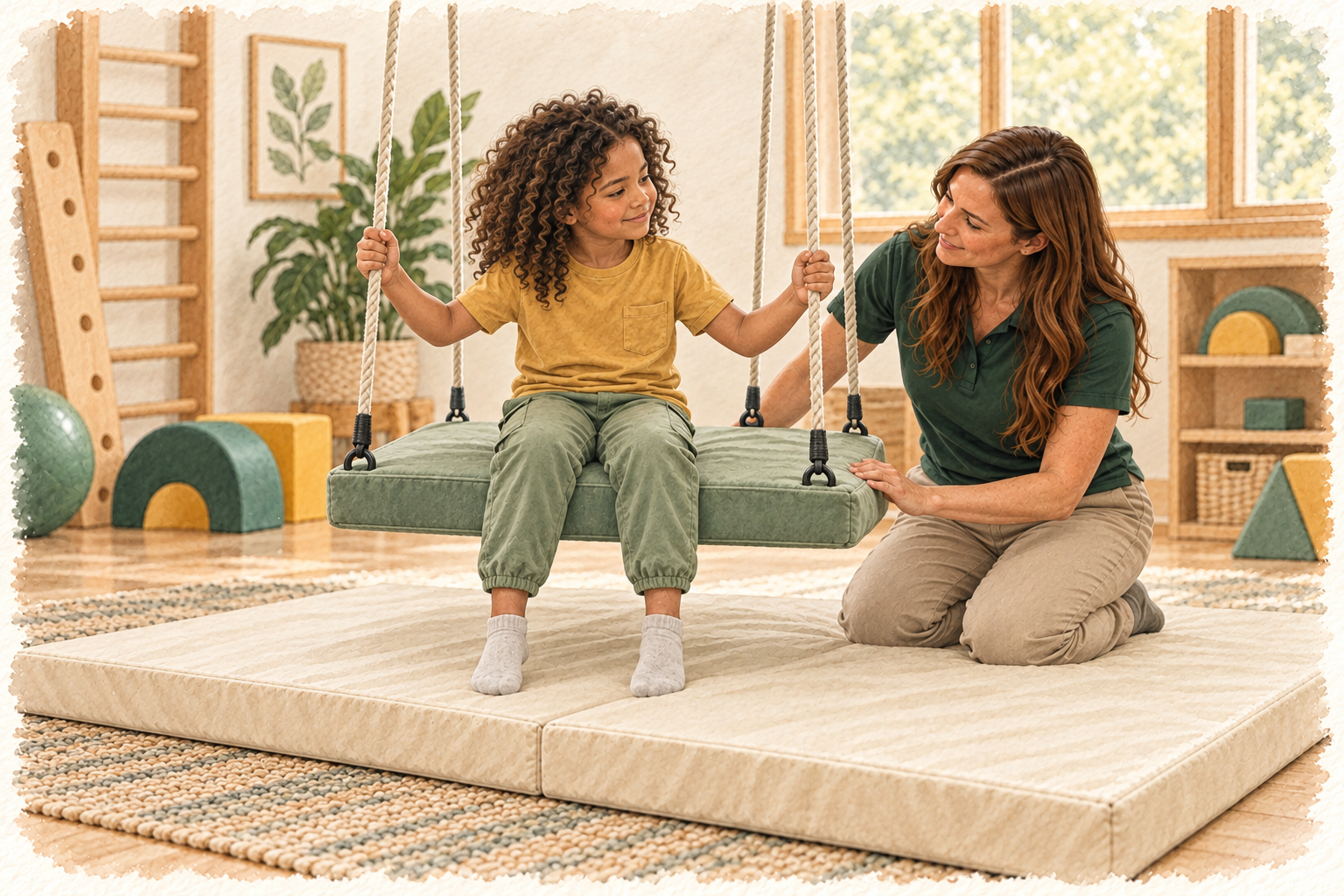
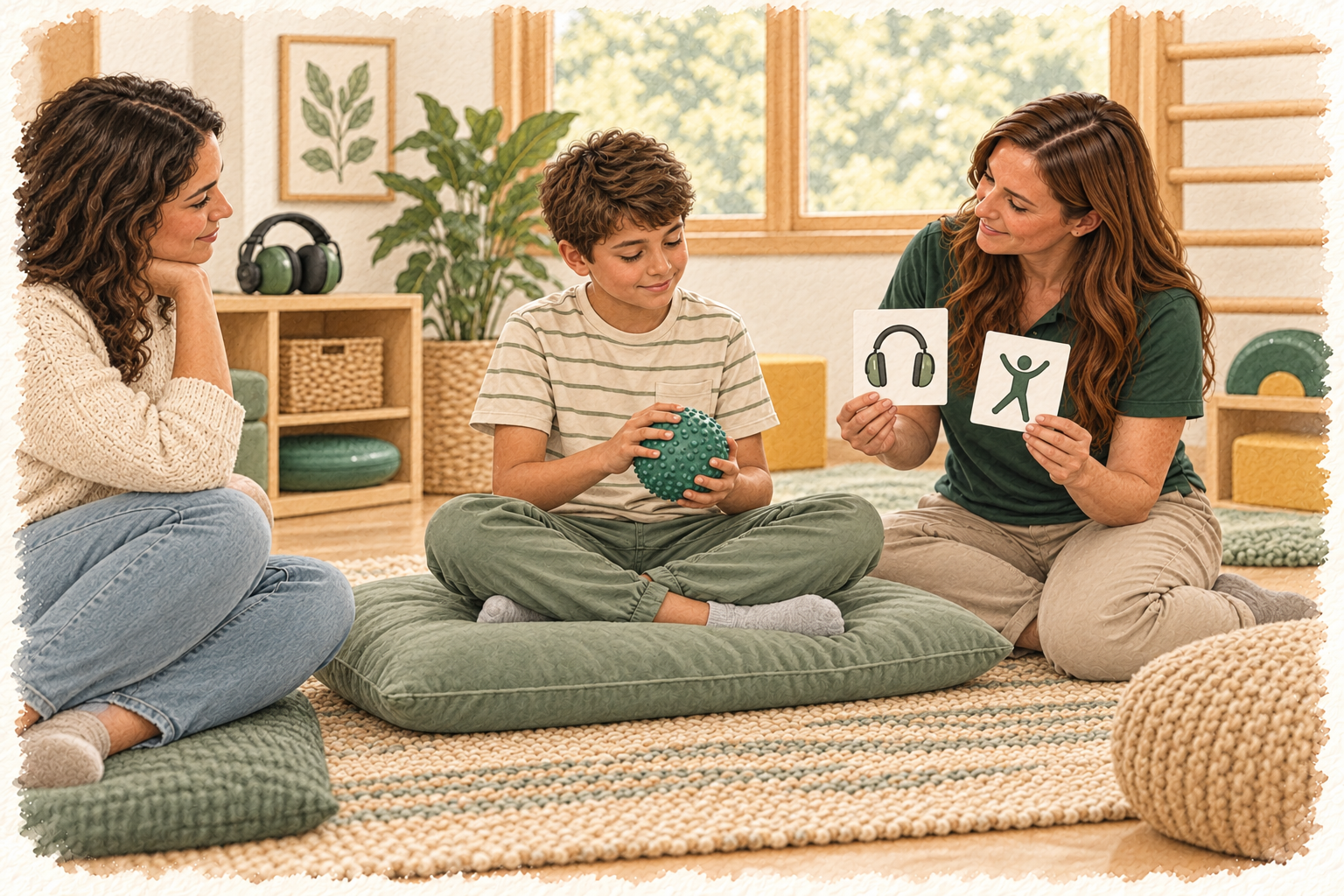
Sensory Regulation & Integration Intensive
A focused program exploring sensory responses, regulation, and participation through individualized sensory-informed activities and meaningful routines.
Strategies are selected around personal preferences and goals, with client or caregiver coaching and a practical plan for home.
Explore this intensive: Sensory Regulation & Integration
Focused care for adults
Adult Neuro-Based Occupational Therapy Intensive
Focused, individualized occupational therapy for adults experiencing changes in movement, coordination, sensation, or everyday function related to a neurological condition or injury.
Explore this intensive: Adult Neuro-Based Occupational Therapy
Hands-on facilitation and active movement practice are tailored to your neurological needs and personal goals. Treatment may emphasize postural and trunk control, supported weight-bearing, guided weight shifts, arm and hand function, strengthening, coordination, and motor retraining.
Kristy adapts positioning, support, and task demands to encourage active participation and more efficient movement. Practice connects these skills to the everyday activities that matter to you, with caregiver education and specialized modalities considered when clinically appropriate.
Typically 4–5 days per week, 3–4 hours per day, for 3–4 weeks. Scheduling, rest breaks, and treatment demands are individualized following evaluation and adjusted for fatigue and tolerance.


Contact Kristy to discuss suitability, individualized goals, and current intensive availability.
Specialized modalities offered
More tools.
One individualized plan.
Approaches are selected following assessment and discussed with your family, based on individual goals and suitability.
Primitive reflex integration
Assessment of reflex-related movement patterns and individualized activities connected to functional goals.
Dynamic Movement Intervention
DMI Level A techniques, incorporated into an individualized movement program when appropriate.
Sensory processing & integration
Sensory-informed play and strategies shaped around individual responses, preferences, and everyday participation.
FES & NMES
Functional Electrical Stimulation and Neuromuscular Electrical Stimulation, considered as part of an individualized treatment plan when clinically appropriate.
Neurodevelopmental approaches
NDT-informed care and a background in conductive education bring a movement-focused perspective to therapy.
Kinesiology Taping (KT)
Individualized taping techniques incorporated into therapy when appropriate for individual movement and functional goals.
Casting & splinting
Individualized assessment and planning for casting or splinting, with guidance on fit, use, and follow-up as part of individual care.
Nature-based therapy
Purposeful outdoor play and exploration that connect movement, sensory experiences, and everyday skills with the natural world.
Parent coaching & home programs
Practical guidance that connects therapy goals with the routines, spaces, and activities your family already knows.
Rooted classes & family programs
Play. Connect.
Grow together.
Classes typically meet once a week for 60 minutes. Ask about upcoming groups and the best fit for your child.
Rooted in nature. Growing through play.
Sensory Explorers
Nature-inspired discovery through all five senses. Plant, create, investigate, and play in a small group guided by occupational therapist Kristy Guetzloe, with room to explore at your child’s pace.
Explore this class: Sensory Explorers
A peek into Sensory Explorers


Different ages. Meaningful ways to explore.
Younger children: sensory discovery, pretend play, simple choices, and caregiver connection.
Older children: nature investigations, planting, sensory art, building, and experimenting with materials—with space to explore preferences and communicate needs.
Older children, including neurodivergent children, are welcome in age-respectful groups matched to interests, sensory preferences, and support needs.
Explore through all five senses
- Touch: leaves, smooth stones, sand, water, and other textures.
- Sight: nature’s colors, shapes, light, and shadows.
- Sound: birds, rustling leaves, gentle water, and rhythms.
- Smell: mild herbs and flowers, with scent-free alternatives.
- Taste: familiar, caregiver-approved foods when appropriate, considering allergies and feeding safety. Nature materials are for exploring, not tasting.
Each theme offers choices—not a requirement to try every sensation. Children can watch first, use tools, take breaks, or choose an alternative.
A little purpose. Plenty of possibility.
A shared theme might invite us to plant a small garden, investigate water, create leaf art, or build together. Experiences bring nature indoors or include outdoor exploration when available.
Grounding through movement and connection
Grounding means noticing the body and connecting with the present moment. We may feel feet press into a steady surface, push or carry age-appropriate materials, stretch, or pause to notice the surroundings.
Small groups, thoughtful support
- Ages 2–3: caregivers are encouraged to participate.
- Ages 4–5: children begin exploring more independently, with support as needed.
- Older children: separate groupings with age-appropriate activities and individualized support.
- Group size: up to 5–6 children per OT, with smaller groups or additional support when needed.
Typically early mornings, once a week for 60 minutes. Kristy will help confirm group fit, caregiver participation, location, and availability.
Take it home
Discover your child’s sensory preferences and leave with a simple nature-inspired idea for play and connection at home.
Noticing body signals. Growing confidence.
Potty Ready!
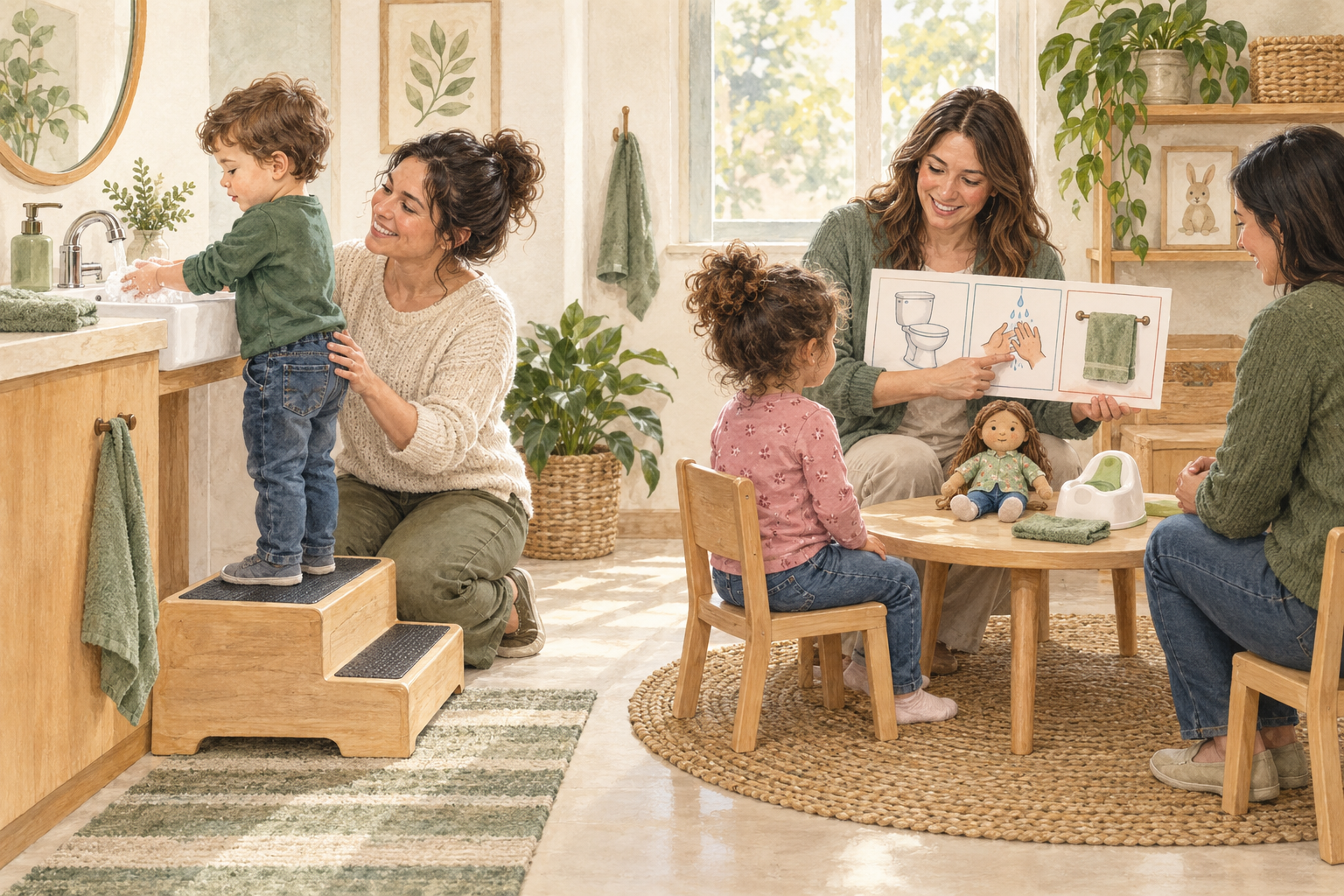
A supportive, play-based class for children and caregivers to explore toileting readiness, body awareness, comfortable routines, clothing skills, and communicating needs.
Explore this class: Potty Ready!
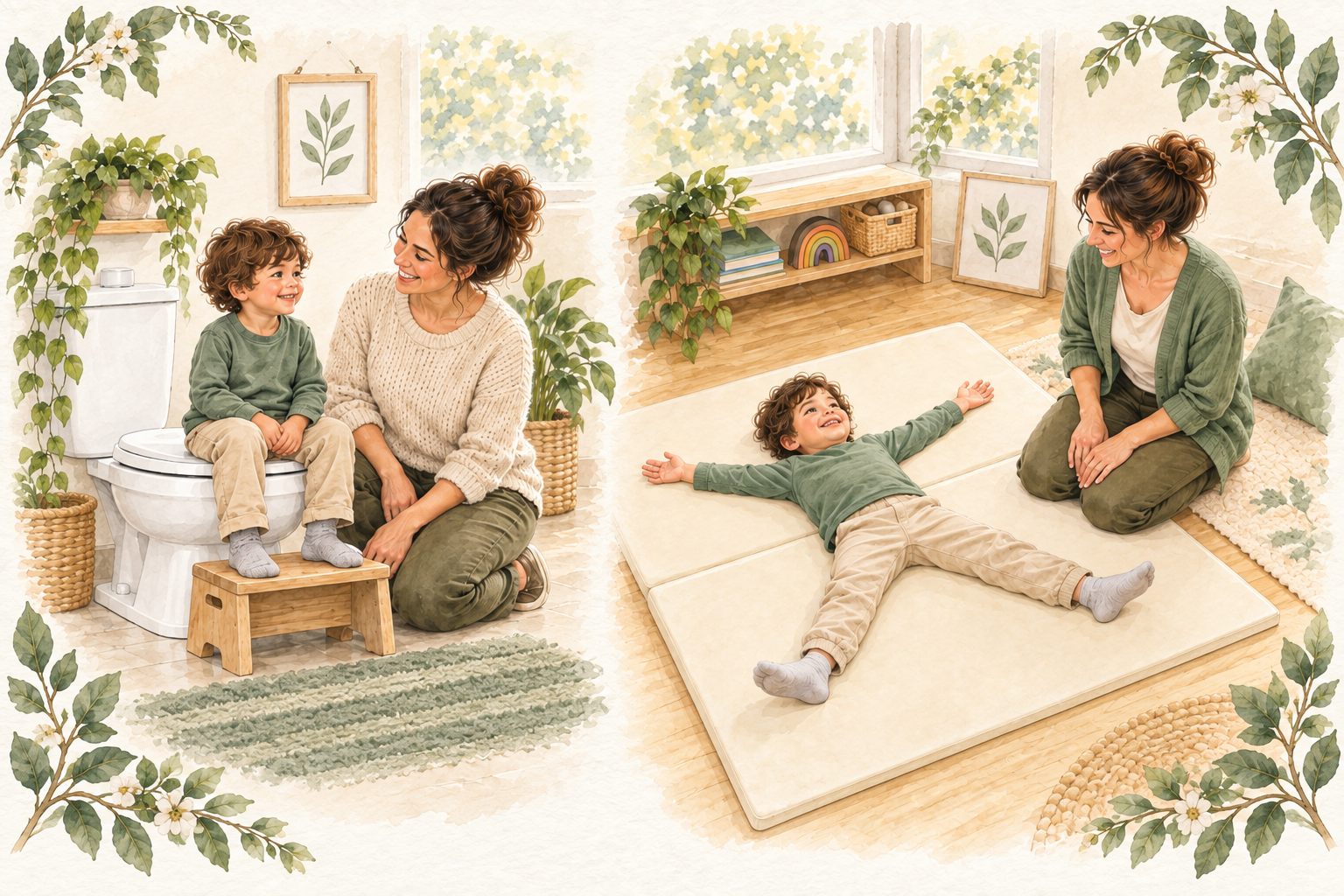
What might we do?
- Use stories, pretend play, and visual routines to make bathroom steps familiar.
- Practice clothing management and handwashing.
- Explore words, pictures, or gestures for communicating bathroom needs.
- Notice body sensations through movement and quiet check-ins.
Nature-inspired activities offer opportunities to slow down and notice sensations. Bathroom learning stays private and respectful.
A gentle approach
Children develop readiness at different times. There is no pressure to perform, and the class does not promise toilet training within a set timeframe.
Take it home
Recognize readiness, support communication, and create a manageable routine at home.
Typically once a week for 60 minutes, with caregiver involvement. Ask about readiness, group fit, and upcoming dates.
Small discoveries. Shared moments. Room to grow.
Little Movers & Thinkers
Guided movement and practical parent coaching for infants and toddlers. Build early movement skills, strength, and coordination through two stages of playful learning.
Explore this class: Little Movers & Thinkers

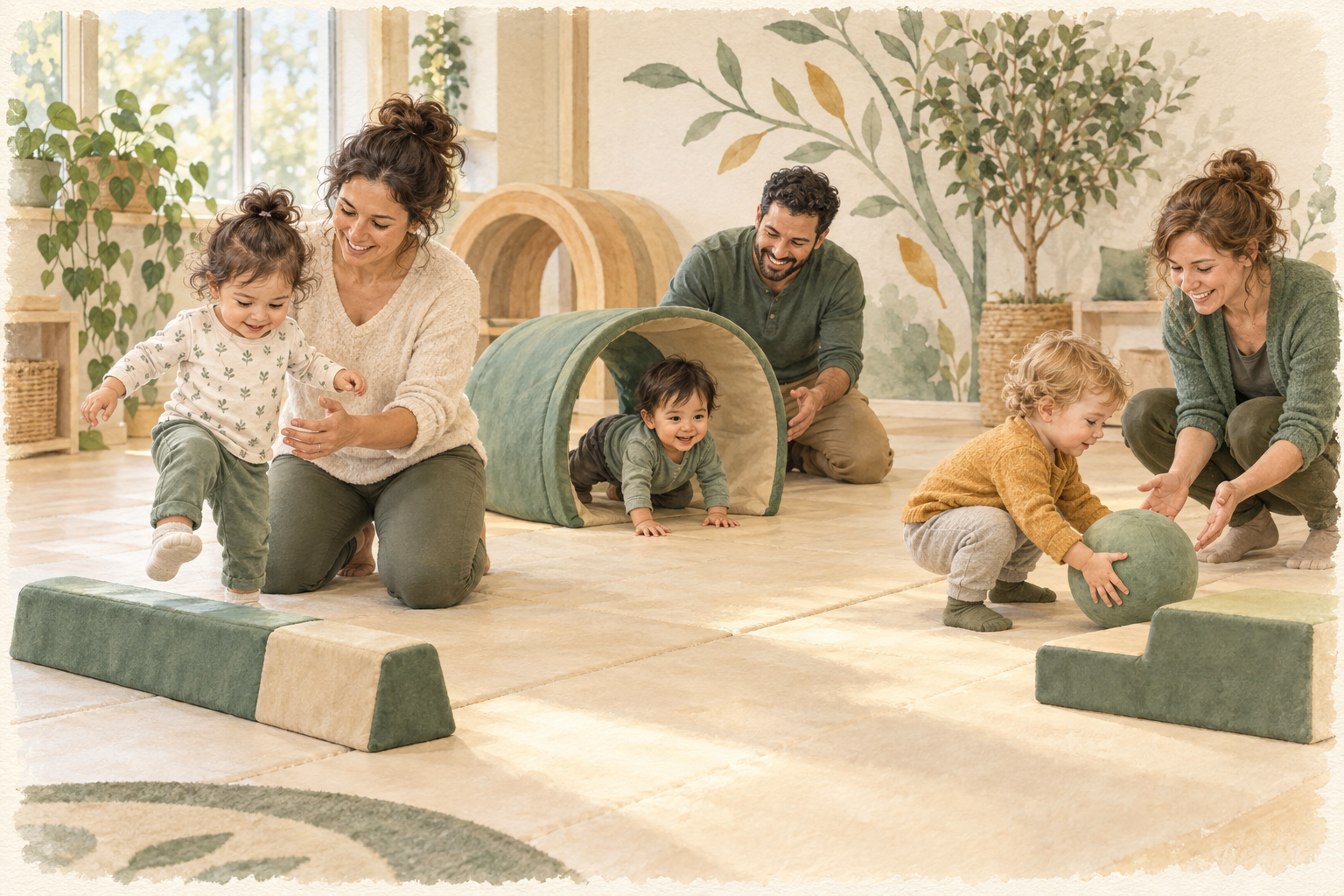
Baby Foundations
For infants, grouped by movement stage. Explore reaching, rolling, floor play, transitions, and early mobility through activities matched to your baby’s abilities. Caregivers practice positioning, reading their baby’s cues, and offering just enough help.
Toddler Movers
For approximately 18 months–3 years, based on readiness. Guided circuits bring together low climbing, tunnels, pushing and pulling, carrying, stepping over obstacles, and simple movement sequences. Caregivers participate as children practice increasing independence.
Coaching that carries into everyday life
Kristy helps you notice how your child moves, adapt activities, and encourage comfortable, varied movement. Coaching may address asymmetry or compensatory strategies and consider reflex-related patterns when relevant to everyday skills. Persistent concerns may lead to a recommendation for an individual evaluation.
Soft light, nature-inspired materials, familiar voices, and breaks keep the experience responsive to your child’s sensory needs.
Take it home
Leave with practical movement ideas, a better understanding of how much help to offer, and opportunities to ask developmental questions.
Typically once a week for 60 minutes, with a caregiver participating. Grouping considers developmental stage and support needs. Feeding, comforting, and breaks are welcome. Contact Kristy about placement and availability.
Move together. Notice more. Connect through play.
Ready, Set, Move!
A playful movement group for ages 3 and up, focused on teamwork, visual-motor skills, and executive-function practice. Children plan, sequence, communicate, and solve problems through cooperative games and shared movement challenges.
Explore this class: Ready, Set, Move!
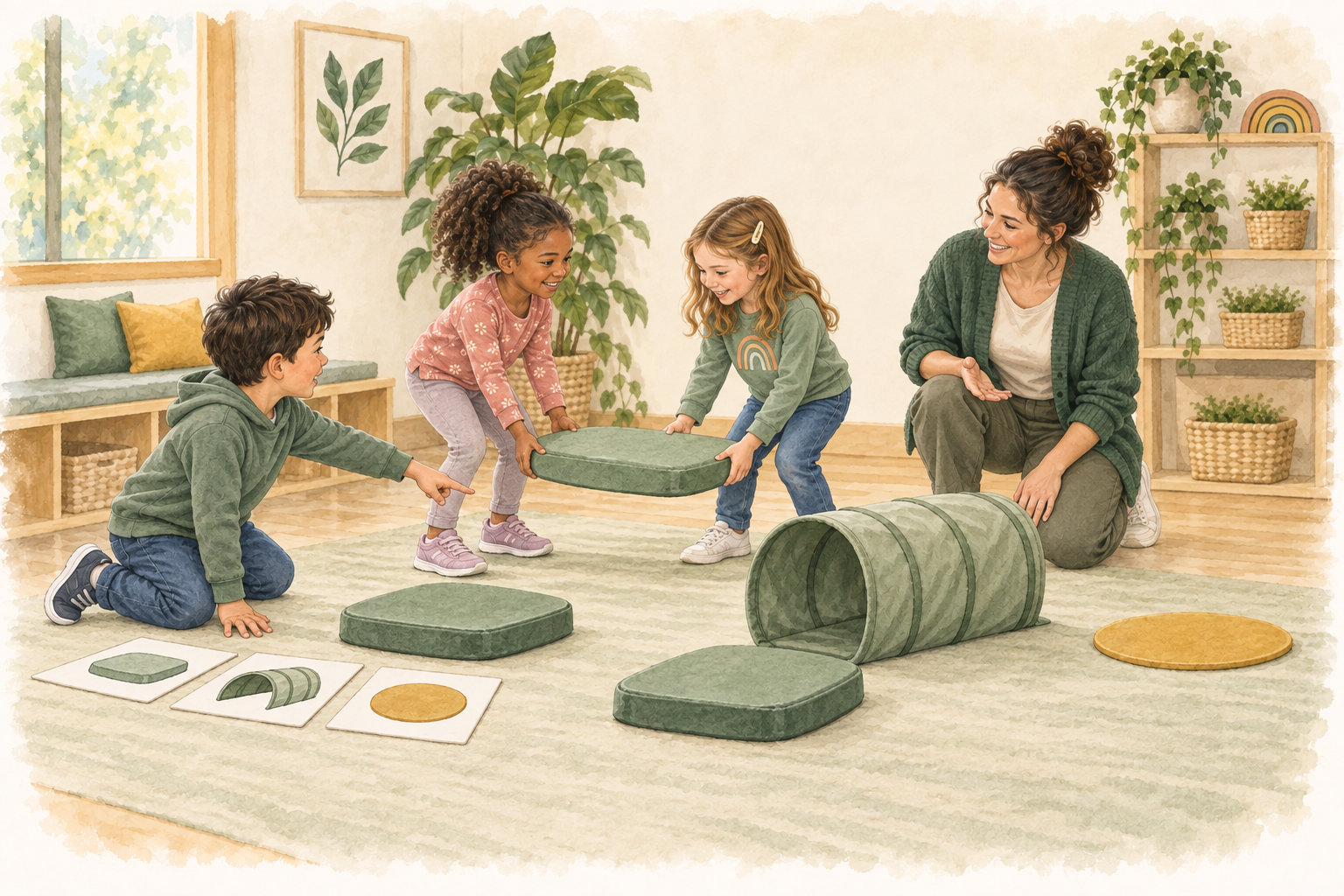
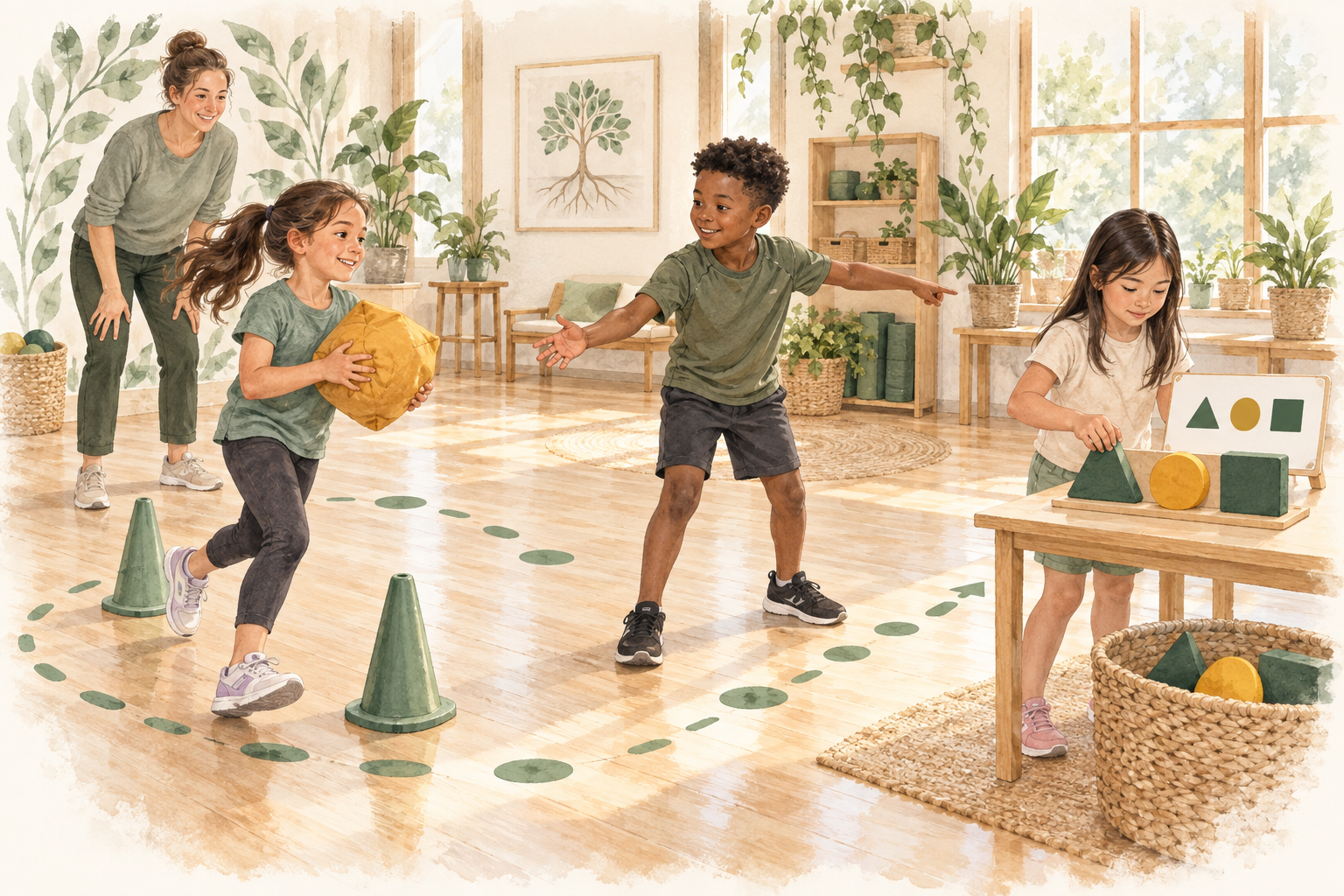
What might we do?
- Find matching targets with a partner, scan for clues, and plan where to move next.
- Practice visual tracking, aiming, and eye-hand coordination through cooperative ball and target games.
- Communicate a plan, share roles, take turns, and solve movement challenges together.
- Build or follow an obstacle course as a team, with opportunities to ask for help and encourage others.
- Practice adapting to a teammate’s ideas, changing plans, and different ways to participate.
Movement with a social purpose
Social participation and visual-motor skills guide each activity. Strength, balance, and coordination are woven into the shared challenge. Activities are adapted so children can participate with appropriate support and experience success.
The focus is on noticing, planning, and connecting through cooperative play. Tactile and scent-based exploration are primarily part of Sensory Explorers.
Who is this group for?
Ages 3 and up, with separate groupings based on age and support needs. Neurotypical and neurodivergent children are welcome. Kristy discusses group fit with each family before placement, considering communication, transitions, safety, and the support needed to join shared activities.
Children attend without caregivers participating in class. This group is designed for children who can participate with the support available from the group OT. Children needing ongoing individual support may be better served by a smaller group, additional staffing, or individualized therapy.
Up to 5–6 children per OT; never more than six. Actual enrollment may be smaller depending on the group’s needs.
Typically once a week for 60 minutes. Contact Kristy to discuss readiness, grouping, and availability.
Support for the grown-ups. Practical ideas for everyday life.
Parent Workshops & Coaching
A welcoming space to ask questions, understand your child’s needs, and explore strategies that fit your family’s routines.
Explore this class: Parent Workshops & Coaching


What might we explore?
- Sensory preferences and comfortable participation.
- Transitions, play, dressing, and other daily routines.
- Recognizing body signals and supporting communication.
- Adapting activities and environments to make participation easier.
- Nature-inspired play and simple sensory noticing in everyday moments.
Grounding activities might include noticing the support of a chair, pressing feet into the floor, or pausing to observe the surroundings. Families explore what feels helpful and comfortable.
Start small
Choose manageable changes, notice what helps, and adjust as needed. There is room for your questions, priorities, and real-life schedule.
Workshop and individual coaching formats vary. Ask about current topics, scheduling, and whether children attend.
Group placement considers each child’s developmental stage and support needs. Contact Kristy for current dates, age groupings, and availability.
Find Your Group
Three simple questions to explore Rooted programs. Choose what feels closest today. No name or contact details needed.
Your selections stay in this page and are not submitted with an inquiry. You can also contact Kristy directly if you are unsure where to begin.
A few helpful answers
Finding the right fit.
What ages do you serve?
Rooted provides individualized occupational therapy for infants, children, and adults. Our children’s classes are grouped by developmental stage and support needs; contact Kristy to discuss the right service for you or your family.
Should we start with an evaluation or a class?
If you have specific concerns about development or daily participation, an evaluation can help clarify your child’s needs. Contact Kristy to discuss whether individual therapy, a group, or parent coaching is a suitable starting point.
What does an intensive day look like?
Intensive programs typically run 4–5 days per week, 3–4 hours per day, for 3–4 weeks. Daily plans include individualized activities, breaks, and client or caregiver guidance, with pacing adjusted to individual needs.
How do we join a class?
Contact Kristy with the class you’re interested in. She’ll discuss current availability, group fit, and the next steps for participating.
Start with a conversation
Let’s find your
next meaningful step.
Share what you’re noticing and what you hope will feel easier.
Connect with Kristy